
Suit Up: Surviving Toxic Families Without Losing Yourself
A trauma-informed guide to boundaries, emotional regulation, and reclaiming who you are.
If you’re tired of being the one who keeps the peace, carries the guilt, and absorbs the fallout, this book was written for you.
Suit Up helps you understand what toxic family dynamics do to the nervous system and how to protect yourself without losing your voice.
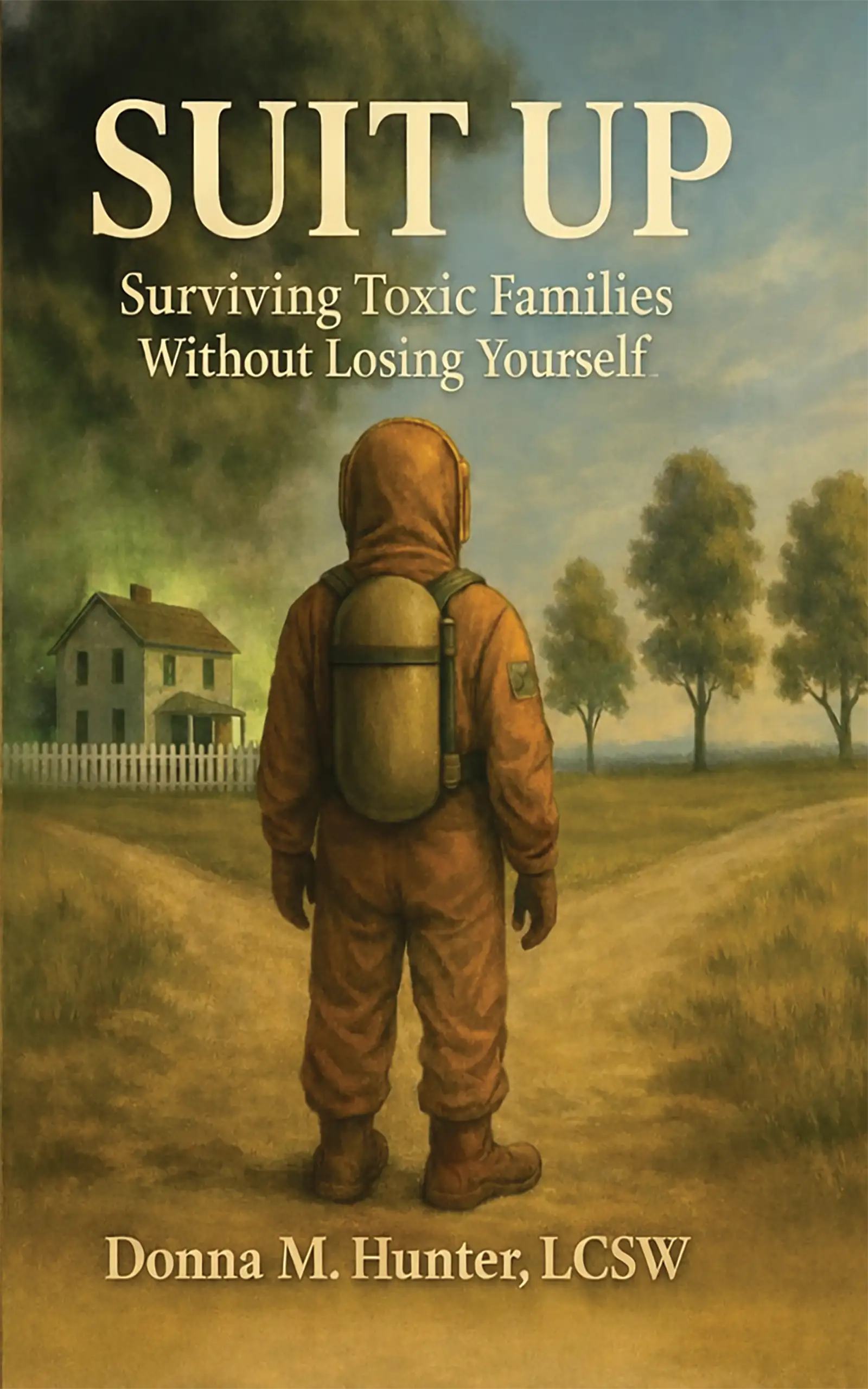
Suit Up Surviving Toxic Families Without Losing Yourself
“You don’t have to lose yourself to keep the peace.”
Who this book is for
Suit Up is for you if you:
- feel guilty for setting boundaries
- over-explain, over-function, or people-please to keep the peace
- struggle with emotional reactivity or shutdown
- second-guess yourself after difficult interactions
- want healthier relationships but keep repeating the same patterns
What you’ll learn
You’ll learn how to:
- recognize toxic patterns clearly
- regulate emotional overwhelm and triggers
- set boundaries that hold up under pressure
- respond differently without losing yourself
- rebuild self-trust and move forward with clarity
What readers are saying
“A validating, trauma-informed guide for surviving toxic family systems without handing yourself over as collateral damage.”
Reviewed by Robin for Robin’s Review
Read the full review
What Did I Just Walk Into?
Well. Apparently I walked into a book that looked me dead in the eye and said, “You are not dramatic. You are exhausted.” Rude, helpful, and honestly a little too accurate.
SUIT UP: Surviving Toxic Families Without Losing Yourself is not one of those fluffy self-help books that tells you to take a bath, light a candle, forgive everyone, and magically stop flinching every time your phone rings. Thank goodness. This book knows that some family dynamics require more than positive thinking and a Pinterest quote slapped over a sunset.
Donna Hunter uses the metaphor of an emotional hazmat suit, and let me tell you, that works. Because some people do not just bring drama. They bring fumes. They bring emotional contamination. They bring the kind of chaos that clings to your nervous system long after the conversation is over. The hazmat suit idea gives readers a way to think about protection without becoming cold, cruel, or completely shut down.
Here’s What Slapped
What I appreciated most is that this book does not push the reader into one extreme or another. It is not screaming, “Cut everyone off immediately!” and it is definitely not whispering, “But they’re family, so keep letting them emotionally body-slam you at Thanksgiving.” It sits in the complicated middle, which is where so many survivors actually live.
The tone is compassionate but firm. Ms. Donna Hunter gives language to things people often struggle to explain, especially when toxic family patterns have been normalized for years. She talks about guilt, loyalty, grief, anger, boundaries, nervous system protection, and the painful reality of loving people who may never be safe for you. Fun little family picnic, right?
The clinical insight is grounded without feeling cold. The client stories and practical exercises make the book feel usable, not just informative. It is the kind of book readers can underline, dog-ear, cry over, rage-clean after, and then come back to when they need a reminder that self-protection is not betrayal.
I also liked that it does not make healing sound neat. Healing from toxic family systems is messy. Sometimes it looks like distance. Sometimes it looks like limited contact. Sometimes it looks like finally admitting that the peace you were protecting was never actually yours.
What Could’ve Been Better
This is not a light read, emotionally. It is clear, accessible, and well-written, but the subject matter is heavy because family wounds hit differently. Some readers may need to take it slowly. And honestly, that is probably how this kind of book should be read. One chapter, one breath, one “oh no, that was my childhood” moment at a time.
Perfect for Readers Who Love
Trauma-informed self-help, boundary work, healing from dysfunctional families, compassionate truth-telling, and books that do not gaslight you into calling survival “overreacting.”
SUIT UP is a smart, compassionate, deeply validating guide for anyone trying to stop absorbing the emotional waste of toxic family systems. It does not tell you to disappear. It teaches you how to protect yourself, choose wisely, and build a life where you can finally breathe.
Interviews, panels & presentations
Media, Podcasts & Speaking
Donna M. Hunter is available for podcast interviews, media conversations, guest articles, professional panels, and speaking engagements. Her approach is compassionate, wise, straightforward, and grounded in the reality that family pain rarely has one villain or one right answer.
Featured speaking themes
- Surviving Toxic Families Without Losing Yourself
- Boundaries Without the Guilt
- Leaving, Staying, or Something In Between
- The Grief Nobody Talks About: Ambiguous Loss and Family Estrangement
- Healing Without an Apology
- What Forty Years of Trauma Work Has Taught Me About Families
Custom conversations
Donna can also shape presentations around trauma recovery, estrangement, emotional regulation, grief, anger, loving detachment, healthier relationships, and the choices people face around family contact.
For organizations, groups and libraries
If you are considering Suit Up for an organization, educational group, professional community, or library, send an inquiry with what you are planning and the audience you hope to reach.
Continue the conversation
If Suit Up resonates with you, Sagewood Way is the home for Donna's writing, speaking, consulting, educational work, and future programs.
Sagewood Way does not provide psychotherapy through this website.